Why does the dummy fairy work when taking it away doesn’t?
Because the child does the giving. Removing a comfort object is something that happens to a toddler, and the only response available to them is to protest until it comes back. Handing it over is something they do, on purpose, for a reason they understand, in exchange for something they can point at afterwards. The loss is identical. The story around it is not, and the story is what they are actually left holding at two in the morning.
People assume the magic is the point. It isn’t. The magic is just the wrapping on something quite ordinary, and I’d rather you knew what was in the parcel.
The science in thirty seconds
- They chose it. Giving it away is something they do, not something done to them.
- Something came back. The letter proves it was noticed; the star is something to find on a bad night.
- It has an ending. After the handover, “can I have one?” has a short answer: they’re stars now.
- Nights two and three are the hardest. Most families are back to normal sleep within seven to ten days.
- Best from about two to three and a half. Younger, a gradual taper is kinder.
Three things are doing the work
1. They chose it
A two-year-old has almost no control over anything. Bedtime, dinner, the car seat, the coat - all decided for them, all day. Giving something away is one of the very few genuinely large decisions a small child is ever offered, and they know it. That is why they walk taller for a week afterwards, and it is why the whole thing collapses if you take the choosing away by doing it for them while they are asleep.
Everything in the instruction manual that looks fussy - let them find them, let them count, let them carry the box, let them pick the spot - is there to protect this one thing.
2. Something came back
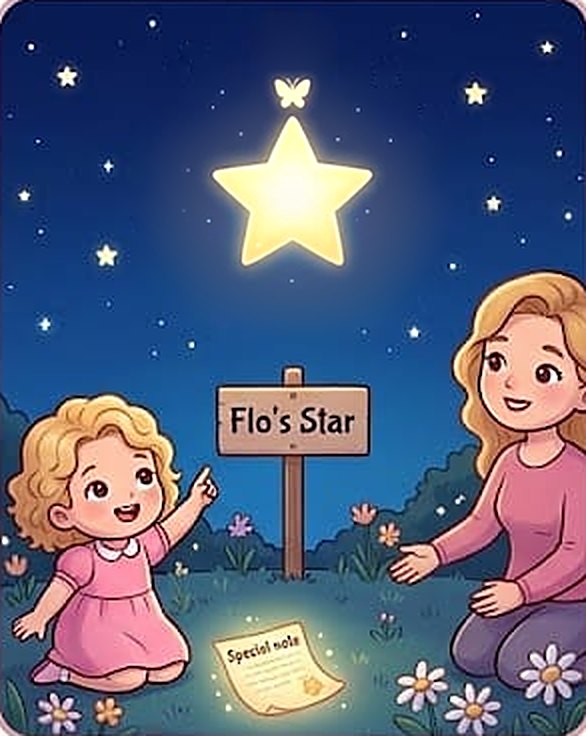
An exchange has two halves, and a toddler will check. The letter is the receipt. It proves the thing they did was noticed, by somebody outside the house, who counted. The star is the part that lasts - not because they believe it is literally their dummy, but because it is a thing they can go outside and find on a bad night, which is more than a memory can do.
This is why I make a fuss about naming one specific dummy in the letter. A generic thank-you reads as a thank-you. “Even the blue one with the chewed edge” reads as somebody was actually here.
3. It has an ending
Gradual reduction - one fewer a day, only at bedtime, only in the cot - is perfectly sound advice and works well for a lot of families. What it does not have is a moment. There is no evening where the thing is finished, and so there is no evening after which asking is pointless. With a fairy there is a line, and on the far side of it the answer to “can I have one” is not no, it is they’re gone, they’re stars now - which is a different conversation and a much shorter one.
Why nights two and three are the worst
Night one usually goes better than anyone expects, and this fools people. The novelty is still doing the work: they are pleased with themselves, the letter is coming, and the whole thing is interesting.
By night two the interesting part is over and the missing part is not. By night three they have had time to work out that this is permanent, and to test whether it is. That is the night people cave, and it is the night worth having something to say already decided, rather than improvised at 2am by someone who has been awake since five.
After that it flattens out quickly. Three to five sharp nights, roughly normal sleep inside seven to ten days, is what most families report. Not all - some children barely notice, and a few take a fortnight.
In short: night one runs on excitement; nights two and three are the test. Decide what you will say before then.
The age it works best, and why
Roughly two to three and a half. That window is not arbitrary: it is the stretch where a child is old enough to hold a story in their head across several days and young enough to accept it without auditing it.
Under about 20 months
Too young for the story to land. They will not connect Tuesday’s box with Thursday’s star, so all they experience is a thing that vanished. Gradual reduction is genuinely the better method here, and I would rather say so than sell you something.
Two to three and a half
The sweet spot. Long enough memory to carry the plan, enough language to take part in it, and no particular interest in whether fairies are real. This is who the whole thing is designed for.
Four and over
Some still believe completely. Many half-know, and a few will look you straight in the eye and ask. Run it openly at this age - as a thing you are doing together, with a certificate at the end - and it still works. Run it as a secret and you risk it being about the lie instead.
I should be honest about what I can and cannot show you.
There is a good, growing body of evidence about what prolonged dummy use does to teeth, speech and ears, and about when stopping helps - that is all on the benefits page, with the sources, because it is the part where evidence actually exists.
There is no controlled trial comparing "the dummy fairy" with tapering. Nobody has run one, and I am not going to imply otherwise. What is on this page is a mechanism - autonomy, a completed exchange, and a clean ending - that is well described in how young children handle loss and transitional objects, plus what several thousand families have reported back about timings. Treat the mechanism as reasoning and the timings as experience, not as a citation.
Is it lying to them?
People ask me this, and it deserves a straight answer rather than a wink.
It is the same thing as the tooth fairy and Father Christmas: a shared story a family agrees to tell, which the child eventually grows out of and usually enjoys having been part of. If that sits badly with you - and for some parents it genuinely does - the method still works with the story told openly. “Let’s pretend” and “let’s send them to the fairies” do almost the same job, because the giving is what matters and the giving is real either way.
What I would not do is deny it later if they ask directly and mean it. “It was a story we told, and you were brilliant at it” is a fine ending.