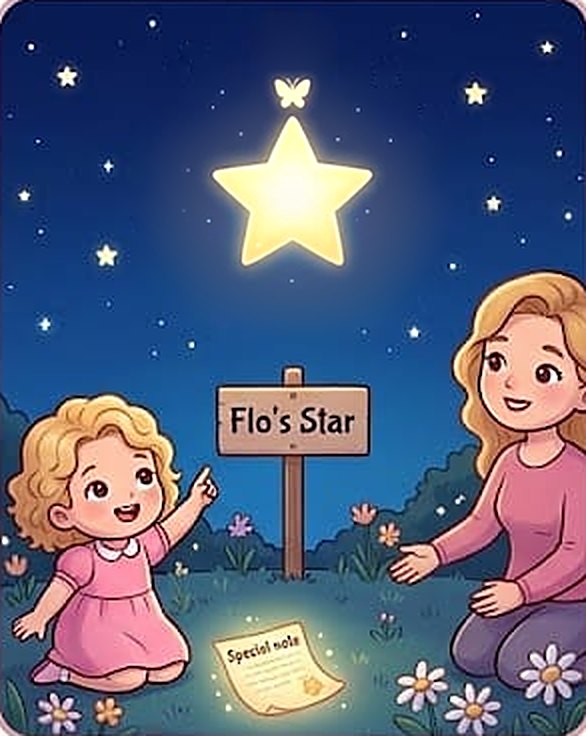
What do you say when they ask for it back?
Say the same short thing every time, in the same order: name the feeling, state the fact, offer the star. “I know. You really miss it. They’ve gone to be stars now - shall we look at yours?” Then stay. Do not negotiate, do not explain it again, and do not add anything new, because a new sentence at 2am reads as a door that might open.
Most of this comes down to words. Not many of them, and the same ones over and over, which is much harder than it sounds at three in the morning.
The do’s
- Do let them do every physical part of it. The finding, the counting, the carrying, the putting down. Your hands stay out of it.
- Do name the feeling before the fact. “You really miss it” first, every time. A child who feels heard argues for a much shorter time than one who feels managed.
- Do say the same sentence. Pick it in daylight, tell whoever else does bedtime, and use it word for word. Consistency is doing more work here than kindness is.
- Do stay in the room. The dummy is gone; you can comfort them.
- Do look at the star on the good nights too. Every night for the first week. A thing you only produce in a crisis stops working in a crisis.
- Do tell nursery. A one-line handover on the Monday saves an afternoon of confusion, and they will usually join in.
- Do pick a dull week. No birthday, no new bed, no first week of nursery, nobody going away. One upheaval at a time.
The don’ts
- Don’t do it while they’re asleep. If they wake up and the dummies are simply gone, it happened to them, and you have thrown away the only part that makes this work.
- Don’t keep one back. Not in the glovebox, not in the loft, not “just for illness”. You will find it at 2am on night three. You will.
- Don’t explain it again in the night. Re-explaining sounds like re-opening. Short sentence, same words, stay put.
- Don’t bargain. “If you stop crying you can have…” teaches that crying is a currency, and the price goes up.
- Don’t make me a threat. I am not coming back for their toys, and nobody should tell them I might. I take what is given and nothing else.
- Don’t make it about being a big girl or a big boy. It gives them something to be small about later.
- Don’t start it the night before something that matters. Nights two and three are not the nights for a long drive or a wedding.
What to say at 2am
Decide these in daylight. Write the one you like on a scrap of paper and leave it where you will see it at 2am, because at 2am you will not be composing anything.
Each of these is three beats: feeling, fact, offer. Say it, then stop talking. The silence after is doing as much as the words.
“I want my dummy”
“I know. You really miss it. They’ve gone to be stars now. Shall we look at yours out of the window?”
“I want it back”
“I know you do. You gave them away, and that was a really big thing to do. I’m staying right here.”
“Go and get them from Ditch”
“They’re stars now, love. They can’t come back down. But your one is up there every single night.”
“I don’t want to be a star maker”
“That’s alright. You don’t have to want to. You already did it, and it’s already up there.”
Things not to say, and what to say instead
| Instead of | Try |
|---|---|
| “Big girls don’t have dummies” | “You gave yours away. That was your idea.” |
| “Don’t be silly, you’re fine” | “You really miss it. That makes sense.” |
| “If you don’t stop, Ditch won’t come” | “She already came. The star’s already yours.” |
| “Maybe just for tonight…” | “They’ve gone. I’m staying here with you.” |
| “You’re keeping everyone awake” | Nothing. Sit down. Wait. |
If you only remember one thing: name the feeling, state the fact, offer the star, and then be quiet and stay. Four moves, the same four every time, for about three nights.