Yes, a dummy can move a child’s teeth. In most children the teeth move back once the dummy goes. Here is what is known, in plain words.
Do dummies affect teeth?
- Long use of a dummy, or a thumb, can push the front teeth forward and the back teeth inward.
- The two changes dentists look for are an open bite (the front teeth do not meet when the mouth is closed) and a crossbite (the top back teeth sit inside the bottom ones).
- A 2026 review of the research found an open bite about seven times more likely in children who use a dummy, and a crossbite nearly three times more likely.1
- What matters most is how long it goes on, more than how hard a child sucks.
Will the teeth go back?
- Very often, yes. An open bite in the baby teeth corrects itself in 50% to 100% of children once the habit stops, including in children over four.2
- The outlook is best when the dummy goes before the adult front teeth come through, at around six.2
- If your dentist mentions a crossbite, ask what they would like to do about it, and when.
If your child is three and still has the dummy for much of the day, this is a five-minute question at your next dental check, not a reason to feel guilty. Ask them to look, and to tell you honestly whether they would stop now or in six months.
When to stop
- Children’s dentists advise stopping by 36 months.3
- The research found the chance of an open bite rose sharply where the dummy carried on past the third birthday.1
- Nearly three is the usual age. You have not left it too late.
For the ages, and what dummies do to speech and ears, see the benefits of stopping.
Our daughter’s teeth
Our dentist said the time was coming: her teeth were starting to move. These are her teeth before she gave up her dummy, and after.
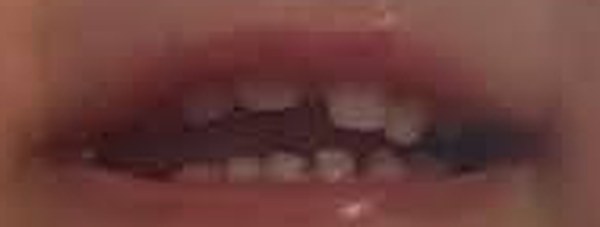
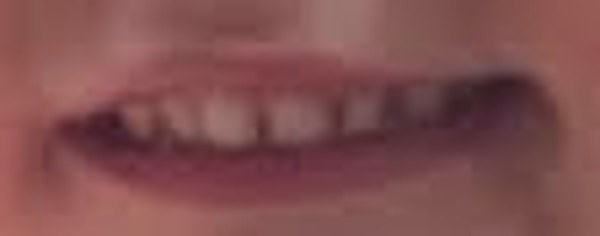
This is one child, ours, and our own photos. It is not a promise about yours. Teeth differ, and only a dentist who has looked can tell you what to expect.
How to stop
- The kind way is to let your child give it, not to take it. The guide has the plan, night by night.
- Expect three hard nights, each quicker than the last.
- Prefer to go slowly? Other ways to wean are compared here.
- The printable pack has Ditch’s letter, the star certificate and the week’s plan: get the pack.
Say pacifier, paci or binky? Read the American version.
Sources
- Dentistry Journal (Basel), 2026. The Role of Digit- and Pacifier-Sucking Habits on Malocclusion Development in Children: Anterior Open Bite and Posterior Crossbite - A Systematic Review & Meta-Analysis. Open bite odds ratio 7.39 and crossbite 2.80 for pacifier-sucking.
- StatPearls / NCBI Bookshelf. Thumb Sucking and Other Nonnutritive Sucking Habits in Children. Self-correction of open bite after the habit stops of 50-100%; best outlook where the habit ends before the adult teeth come through.
- American Academy of Pediatric Dentistry. Policy on Pacifiers. Recommends stopping by 36 months of age.

