
This started in a garden in Hull, with a set of solar fairy lights and a two-year-old who wouldn't give up her dummy.
How it actually happened
We didn't set out to build a method. We put a few miniature fairy houses into the flowerbed - the sort with a small solar panel, so they light up on their own at dusk - because our daughter loved fairies. We didn't point them out. We let her find them herself, and then acted properly amazed. Not everyone has fairies in their garden.
After that we started going outside on clear evenings just to look up. Nothing structured - what shapes can you see, what's that bright one. She could pick out Orion's Belt long before she could write her name.
So when we eventually said that the fairies collect dummies to make new stars, it wasn't a story invented on the spot to get something off her. It was already her garden, and already her sky. We talked about it for a week or so - always when she gave her dummy, never if - and left the timing to her.
When she decided, we found a box and she decorated it herself. Every dummy in the house went in, and she carried it out to the fairies. In the morning there was a letter and a small bag of sweets. That evening we went out and picked her star.
There were still hard nights. That's what the star was for - somewhere to go and something to point at, rather than a flat no in a dark bedroom.
The night itself, in our words
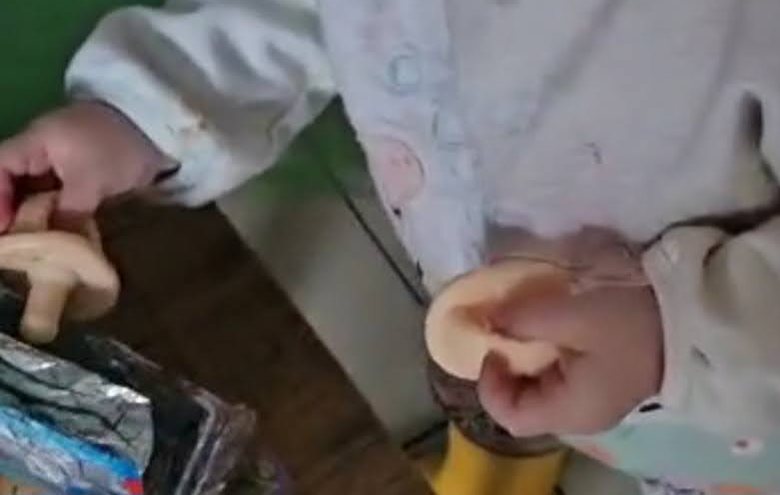
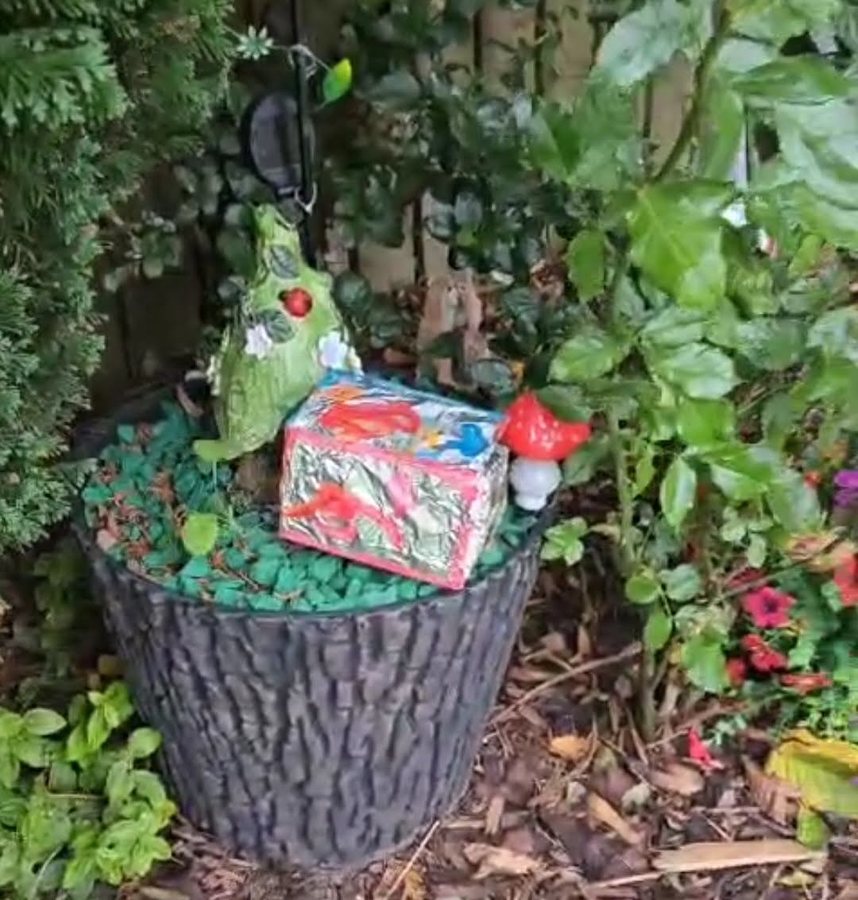
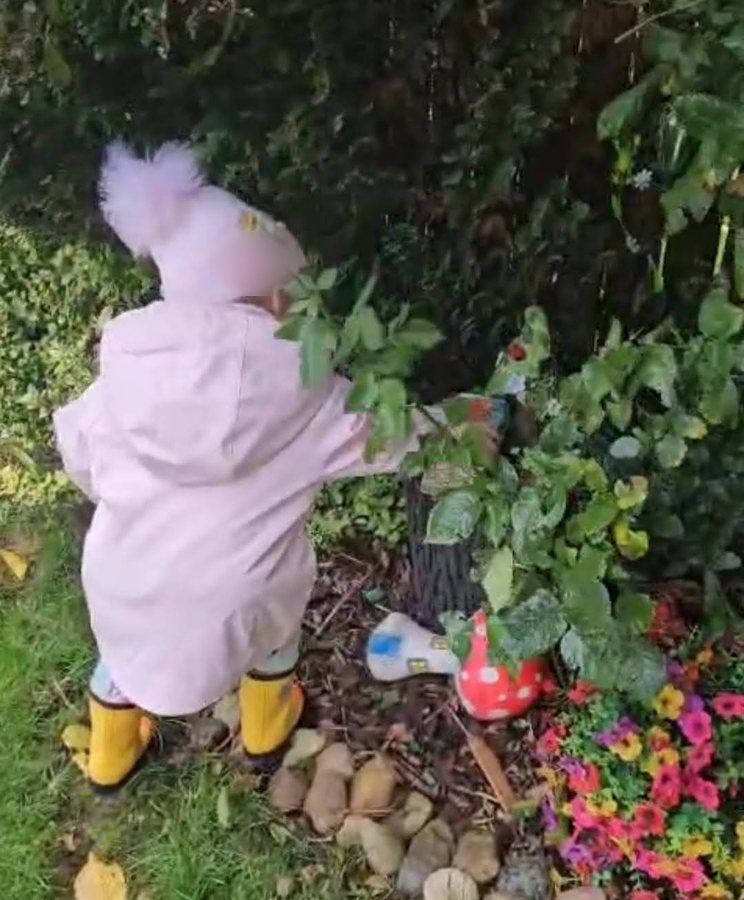
Our child loved the dodo fairy story. She enjoyed creating her box - we used a tea box wrapped in foil and then painted it. She loved it. Once she’d done the box it happened so quickly, and she just wanted to put her dodos straight in. We went outside to the fairy garden (which we’d planted a few weeks earlier), put the box down and waved them off!
She asked for her dodo on the night, and we looked out at the stars - she was excited that Ditch was making one for her! The next night we looked at the sky again, and she told me which star was hers.
Why we wrote it down
Because when we went looking for help beforehand, everything fell into two piles. One pile said "just take it away, they'll be fine in three days" - true, and completely useless at 2am. The other was a lovely picture book about a fairy that stopped exactly where the hard part started.
Nothing joined the story to the practicalities: what to actually say, what to do when they find one down the back of the sofa, what to do on the third night when it clouds over and there's no star to show them. So this site is the version we wanted - a story a toddler can believe, wrapped around a plan an exhausted adult can follow.
Who writes this
Sarah and Dan, in Hull - the two parents who did the above. One of us is a teacher, which is worth exactly as much as it is: it means we are used to explaining things to small children and to noticing when an explanation isn't landing. It does not make us dentists, health visitors or sleep clinicians, and this site never pretends otherwise. Beyond that: one child, a lot of note-taking on the nights it went badly, and a lot of conversations with other parents since. Everything on this site is either what worked for us or what the published guidance says, and where it's the latter we tell you whose guidance and how strong the evidence is.
How we write these guides
- Experience first. Every method on this site has either been run by us or reported to us directly by families who tried it. Where something worked for some children and not others, we say so rather than averaging it into mush.
- Health claims stay in their lane. Where a page touches teeth, speech, ears or sleep safety, it summarises the direction dental and health-visiting guidance points in, and then tells you to ask your own dentist, health visitor or GP. We don't diagnose, and we don't pretend a website can.
- We say when something doesn't work. There's advice on this site telling you not to buy the kit, and advice telling you to stop and try again in six weeks. A page that only ever pushes forward isn't advice, it's a funnel.
- Pages get dated. Every guide shows when it was last updated, and we update rather than republish.
- We'll take corrections. If something here is wrong, or went badly for your child, tell us.
How this is paid for
By the pack. The method is all on this site.